Collection Corner: A Homemaker’s Dream
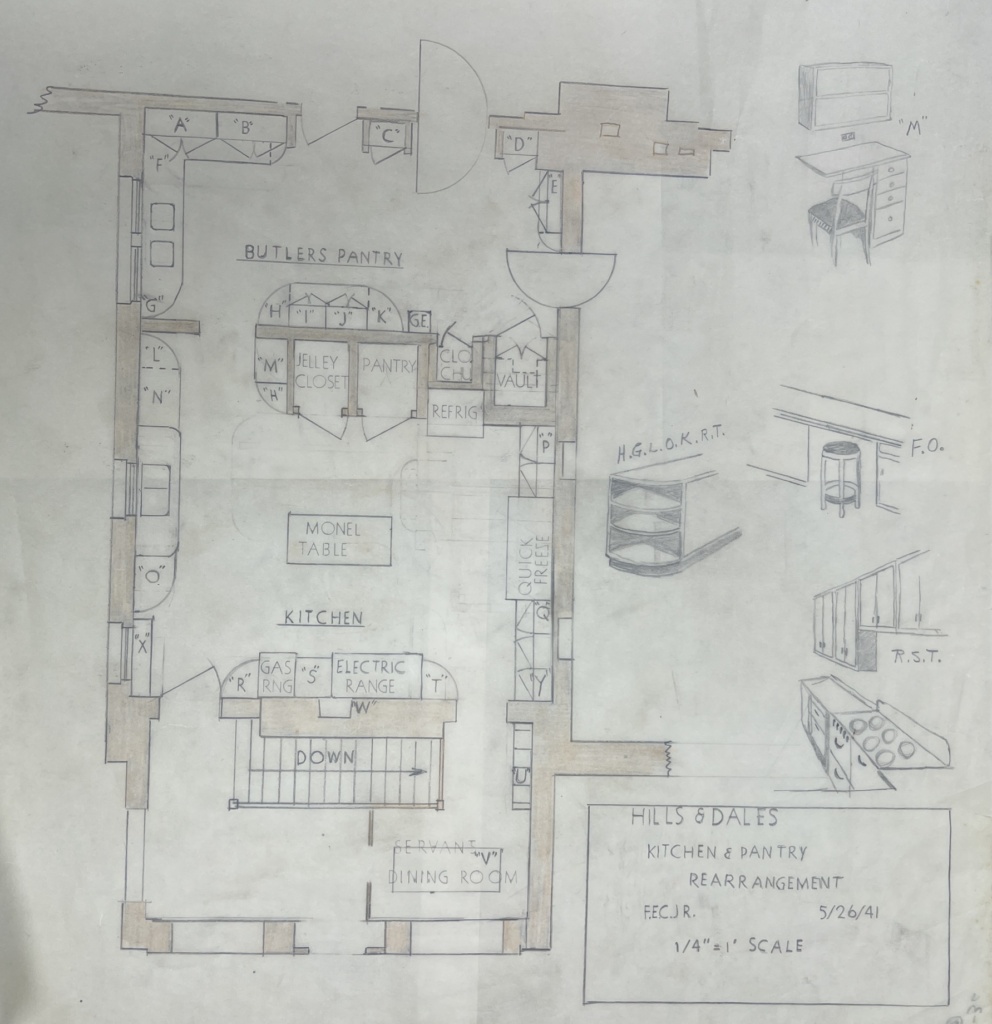
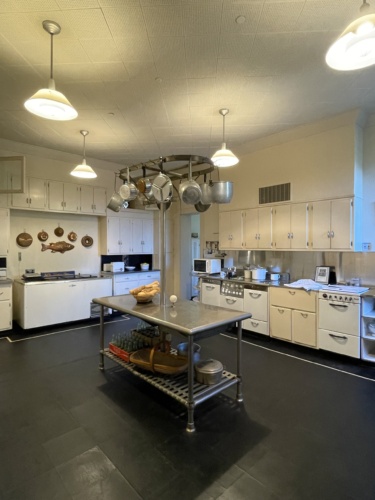
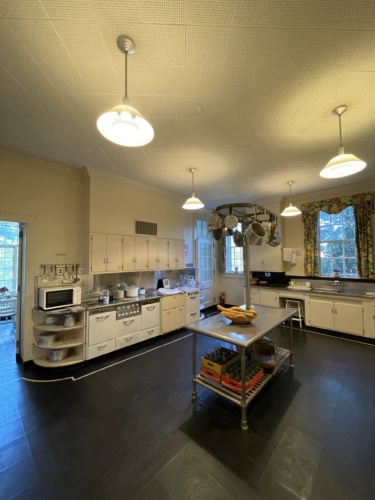
As you walk into the kitchen of the Callaway home, your thoughts might drift to appreciation for the shine on top of the 1916 Monel table, nostalgia over the copper gelatin molds hanging on the wall, or even the desire to check if Hot Diggity Doggers are still available for purchase. Amongst these and other interesting items found in the kitchen, though, is an often-overlooked framed architectural drawing that makes the room and its history even more unique.
In 1913, Fuller Callaway Sr. expressed the desire that his home “embody every convenience that is possible to the situation and to our means” in a letter to architects Hal Hentz and Neel Reid. In response, Mr. Hentz promised to “bear in mind all of the modern conveniences which, combined with a logical arrangement of rooms, will cause a minimum of waste in the actual operation of the house.” With Mr. Callaway’s wishes (and spectacular attention to detail) at the helm, the plans for the home came to fruition. The butler’s pantry featured beautiful wood-paneled china cabinets with glass doors, an ironing board, preserve cabinets, and white tile floors. The kitchen, which at the time included a large storeroom and pantry closet, contained a top-of-the-line Monel metal worktable and an Ideal Stewart combination coal and gas range. In 1916, The Atlanta Constitution published an article about the home’s opening, marveling that, “The villa, although two miles from the city, has every convenience, for Mr. Callaway has made it modern in every respect.”
Fast-forward to Alice and Fuller Jr.’s move into Hills & Dales with their children following Ida Callaway’s death in 1936. Those once-modern details were 20 years old and no longer adequate for the young family. Alice, who frequently hosted friends and family for meals and celebrations, felt as though they couldn’t properly accommodate these types of gatherings, especially since the butler’s pantry wasn’t equipped with counter space. She was also concerned with the number of cupboards, drawers, and cabinets. So, in May 1941, after many evenings of planning with Alice, Fuller Jr. sat down and sketched out their idea of the perfect kitchen and butler’s pantry.
His drawing, now framed and on display for visitors to see, was brought to life by Ivey & Crook, a noted architectural firm out of Atlanta, with construction beginning on November 1, 1941. In a letter sent that December to her friend Katie, Alice wrote: “Well, you should see the upheaval we have been in for the past month. The work of remodeling our kitchen was begun one month ago to-day and we have been eating our meals at the lake since then.” She went on to describe the new, gleaming, white cabinets and walls, stainless steel sink, black rubber floor, and Celatex ceiling, stating: “it’s all just beautiful, so convenient and clean. The only criticism I can find is that the rest of the house looks quite old fashioned in comparison.”
In fact, the Callaway’s new kitchen was so modern, The Atlanta Journal sent reporter Katherine Pierce to LaGrange in 1947 to write a full-page feature called “New-Fashioned Georgia Kitchen.” In the article, Pierce called it a “homemaker’s-dream of a kitchen” and “a kitchen with character – not like anybody else’s, because Mrs. Callaway and her husband designed it especially to suit their own family’s needs and whims.” Specifically mentioned were the built-in silver vault, garbage-disposal unit (a square hole with a hinged top opening above a garbage can in a closed cabinet), and the numerous stoves that run the length of one wall, including a General Electric range, American Stove Company’s Magic Chef gas range, and a Hot Point griddle. Alice is quoted in the article saying, “The griddle is something nice that Fuller thought of. He’s a good cook himself, especially with steaks.” Even with his affinity for cooking, Fuller made sure Pierce did not publish the full name and address of his cook, Arnelle; instead, she wrote, “Even though [Fuller] likes to play chef on occasion in his streamlined kitchen, he doesn’t want to wake up some morning and find himself the only cook in the place.”
The thought and preparation that went into the 1941 kitchen and butler’s pantry remodel paid off, as the space has seen very few changes since that time. When Alice hired W. E. Browne Decorating Company of Atlanta in 1979 to complete some other projects around the home, the kitchen and butler’s pantry simply received some new curtains and a fresh paint job. Throughout the years, small appliances were added, like the visitor-favorite hotdog cooker from the mid-1960s and a microwave. Otherwise, the “kitchen and pantry rearrangement”, as Fuller Jr. called his original sketch, has remained the same for over eighty years. Quoting Katherine Pierce, “There’s not a thing about the kitchen-department of her home that Mrs. Callaway would change – it has all proved to be just what she wanted.” ~HM
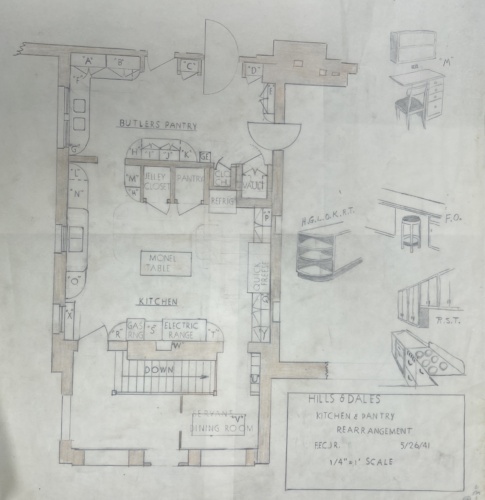
Fuller Jr.’s “kitchen and pantry rearrangement,” circa 1941. |
 |
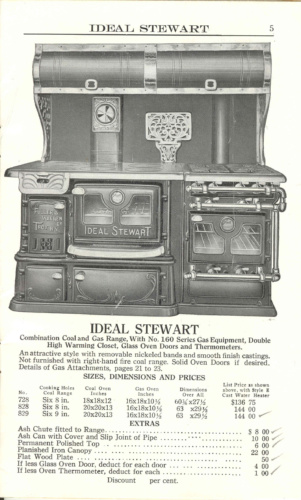
Advertisement for the Ideal Stewart combination coal and gas range that was in the original Callaway family kitchen. |
 |